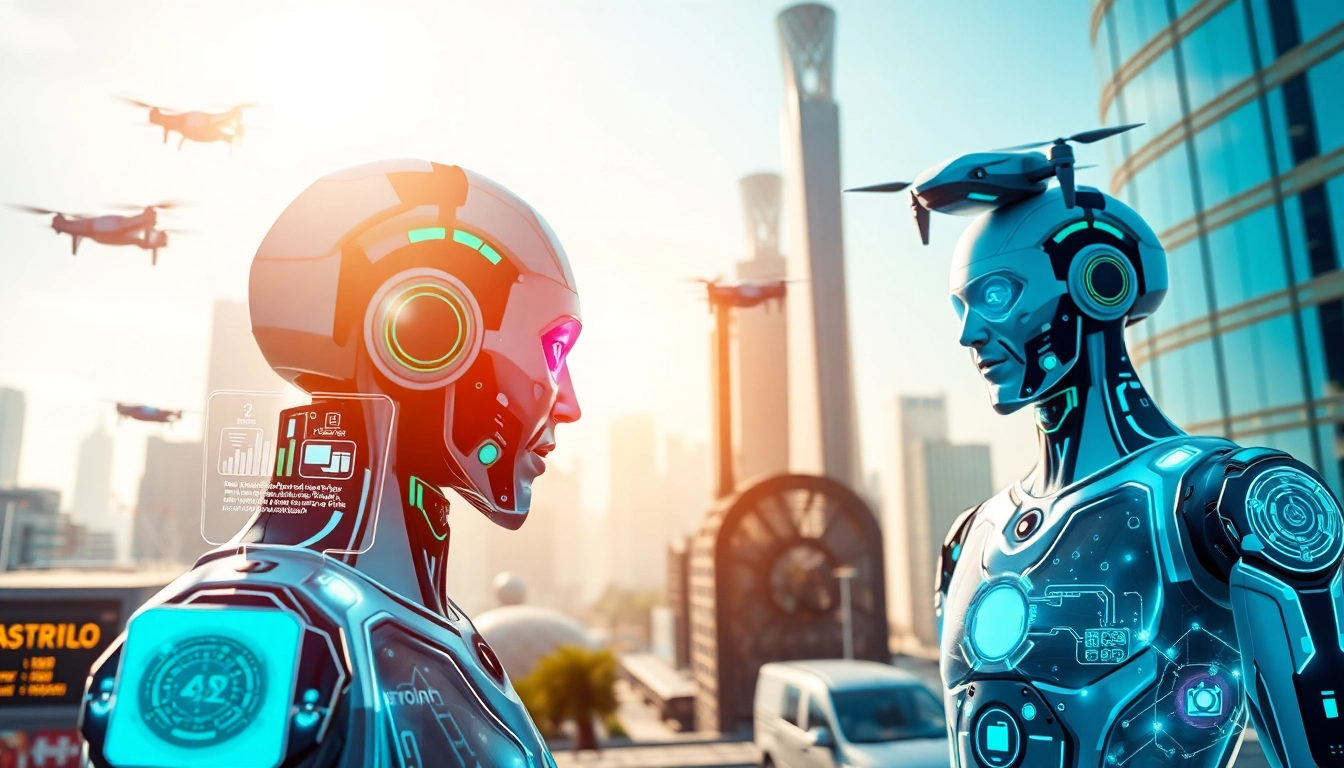
1. Introduction to Ai agents
As technology continues to evolve, the functionality and application of artificial intelligence have rapidly advanced, paving the way for Ai agents—autonomous systems capable of performing a variety of tasks. This article delves into the complexities of Ai agents, exploring their definitions, history, significance, and operational mechanics.
1.1 What are Ai agents?
Ai agents are software systems designed to autonomously carry out tasks, make decisions, and solve problems without human intervention. These systems interact with their environment, assess data inputs, and execute predefined goals. What sets Ai agents apart is their ability to learn from past performance, adapt to new information, and improve decision-making over time, making them invaluable assets in numerous sectors.
1.2 History and evolution of Ai agents
The history of Ai agents traces back to the early days of artificial intelligence. Initially, AI systems were limited to rule-based tasks, where predefined algorithms directed their operations. Over time, advances in machine learning and neural networks revolutionized the capabilities of Ai agents, enabling them to learn from experience. Significant milestones have included the development of natural language processing, robotics, and multi-agent systems, allowing for complex interactions and task execution.
1.3 Importance of Ai agents in modern technology
Today, Ai agents play a critical role across various industries. They streamline processes, improve efficiency, and enhance user experience, making them essential for businesses aiming to optimize operations. From customer service chatbots to predictive maintenance systems in manufacturing, the implications of Ai agents are profound, enabling organizations to harness data and automate workflows effectively.
2. How Ai agents Operate
2.1 The underlying technologies behind Ai agents
Ai agents rely on a multitude of technologies to function effectively. Key components include machine learning algorithms, natural language processing (NLP), computer vision, and reinforcement learning. Machine learning algorithms enable agents to learn from data patterns, while NLP allows them to engage in human-like conversations. Computer vision empowers agents to analyze images and videos, and reinforcement learning provides a framework for learning through trial and error, enhancing their adaptability in dynamic environments.
2.2 Decision-making processes of Ai agents
Decision-making in Ai agents involves several layers of analysis. Initially, the agent receives input from its environment, which may include sensory data, user queries, or contextual information. It then processes this data using algorithms that evaluate possible actions based on predefined objectives. Each decision may also consider factors such as past experiences, the effectiveness of previous actions, and the current state of the environment. Consequently, Ai agents can weigh options and execute tasks that align with their goals.
2.3 Learning capabilities of Ai agents
The learning capabilities of Ai agents are crucial for their efficacy. These agents typically utilize supervised learning, unsupervised learning, and reinforcement learning to improve performance. Supervised learning involves training on labeled datasets to recognize patterns, while unsupervised learning identifies hidden structures within data without explicit labeling. Reinforcement learning allows agents to learn optimal behaviors through a reward-based system, thereby enhancing their ability to make informed decisions in varied situations.
3. Applications of Ai agents
3.1 Ai agents in business workflows
In the business realm, Ai agents significantly enhance productivity and efficiency. They streamline operations by automating repetitive tasks, from data entry to report generation. Furthermore, Ai agents can analyze vast amounts of data to provide insights and recommendations tailored to business objectives, driving informed decision-making processes. This efficiency not only saves time but also reduces operational costs, elevating a company's competitive edge.
3.2 Ai agents in customer service
Customer service has seen a transformative shift through the use of Ai agents. Chatbots and virtual assistants engage customers in real time, providing instant responses to inquiries and accessibility around the clock. This not only improves customer satisfaction but also allows human representatives to focus on more complex issues, fostering a holistic customer support experience. As these agents evolve, they can exhibit a nuanced understanding of customer sentiment and preferences, further personalizing interactions.
3.3 Emerging trends in Ai agents usage
The landscape of Ai agents is continuously dynamic, with several emerging trends. A notable trend is the rise of conversational Ai, where agents utilize advanced NLP to facilitate seamless communication with users. Additionally, the integration of Ai agents with the Internet of Things (IoT) is on the rise, enabling inter-device communication and automation. Strategies integrating Ai agents with data analytics tools are also gaining traction, allowing businesses to harness insights from extensive datasets and make data-driven decisions in real time.
4. Challenges Faced by Ai agents
4.1 Ethical considerations
As with any emerging technology, ethical considerations remain at the forefront of discussions surrounding Ai agents. Questions surrounding privacy, data security, and consent must be addressed, particularly as these agents collect and process vast amounts of personal information. Developing transparent frameworks to guide the ethical use of Ai agents is crucial to foster societal trust and mitigate potential misuse of AI technologies.
4.2 Limitations of current Ai agents
Despite significant advancements, Ai agents have limitations that hinder their efficacy. For instance, their performance is heavily dependent on the quality of training data; biased or incomplete datasets can lead to erroneous decision-making. Furthermore, while Ai agents excel in processing structured data, they may struggle with unstructured information, such as nuanced human emotions and contextual understanding, limiting their effectiveness in specific scenarios.
4.3 Addressing user trust issues with Ai agents
Building user trust in Ai agents is essential for their mainstream adoption. Transparency in the decision-making processes of Ai agents can enhance trust levels among users. Providing clear explanations of how these systems function and the logic behind their decisions is a significant step towards fostering user confidence. Additionally, user feedback mechanisms should be integrated to ensure continuous improvement and responsiveness to user needs.
5. The Future of Ai agents
5.1 Predictions for Ai agents development
The future of Ai agents is poised for remarkable growth. Predicted advancements include enhanced natural language understanding, allowing agents to decipher subtle nuances and context within conversations. Moreover, a more sophisticated integration with other technologies is expected, leading to hybrid agents capable of adapting to complex environments and user demands. As their capabilities expand, Ai agents will likely transition from task automation to becoming strategic partners in decision-making processes.
5.2 Impact on job markets and industries
The proliferation of Ai agents is anticipated to have profound effects on job markets. While some roles may become obsolete due to automation, new job opportunities will emerge, focused on managing, developing, and maintaining Ai systems. The demand for skilled professionals who can bridge the gap between technology and human functions is expected to rise, necessitating a shift in educational priorities to equip workers with relevant training and skills.
5.3 Final thoughts on Ai agents
Ai agents represent a paradigm shift in the approach to technology and automation. Their growing sophistication and versatility position them as vital tools in our increasingly digital world. Organizations that embrace and adapt to this trend are likely to reap significant benefits, enhancing productivity and innovation. As Ai agents continue to evolve, it is essential for stakeholders to focus on ethical practices and user trust to ensure their successful integration into society.
FAQs
What is an Ai agent?
An Ai agent is an autonomous system designed to perform tasks, make decisions, and learn from experiences without human intervention.
How do Ai agents learn?
Ai agents learn through machine learning techniques, including supervised, unsupervised, and reinforcement learning, enhancing their performance and adaptability.
What industries use Ai agents?
Many industries utilize Ai agents, including customer service, finance, healthcare, and manufacturing, where they enhance operational efficiency and decision-making.
Are Ai agents ethical?
The ethical implications of Ai agents are significant. Concerns exist around data privacy, security, and potential biases in decision-making that need addressing.
What are the limitations of Ai agents?
Limitations include dependency on data quality and challenges in processing unstructured information, which can affect decision-making efficacy.